
Herpes Simplex 1 | Cold Sores | Are there oral sex risks?
HSV1 | Herpes Simplex 1 usually causes oral herpes or cold sores.
What is Oral Herpes or commonly called Cold Sores?
Cold sores, also called fever blisters, are caused from the herpes simplex virus (HSV). Cold sores are small, painful, fluid-filled blisters or sores that appear on the lips, mouth, throat, cheek, chin, nose or fingers. Oral Herpes, or cold sores are very common. It is estimated that 80% of the population have been exposed to the herpes simplex virus, HSV-1.
Oral herpes can be caused by HSV-1 or HSV-2, but typically, HSV-1 is above the waist. Genital herpes is usually caused by HSV-2, and generally below the waist. HSV-1 causes about 80% of all oral lesions and cases of HSV-1 genital herpes, below the waist, are rising.
VIR-L-Lysine
Fight Cold Sores with VIR-L-Lysine
What are the Symptoms for Oral Herpes or Cold Sores?
“Prodromal Symptoms” such as pain, itching, or tingling, often precedes the blisters by one to two days. You may have a a sore throat, or swollen glands in your neck. After the prodromal stage, blisters appear, they usually break open, and leak clear infectious fluid, and then crust over lasting 2–24 days.
Canker sores are not the same thing as cold sores. Cold sores usually occur on the outer lip, but canker sores are found inside the mouth. Sometimes people mistakenly associate canker sores with cold sores. Oral Herpes usually appears on the roof of the mouth or the gum area. A sore in the soft tissue of the mouth is usually a canker sore.
Herpes Whitlow, herpes occurring on the fingers, is often contracted from touching cold sores. Practice good hygiene and wash your hands as soon as possible after touching cold sores or sensitive areas in the prodromal stage to prevent spreading the virus.
Man has a cold sore on his lip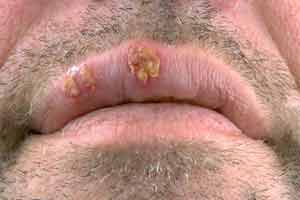
More Pictures of Oral Herpes
How do I get Oral Herpes or Cold Sores?
Sexual contact (oral to oral, vaginal, or anal) is very risky during the prodromal stage, or the time before the blisters appear. At this time, it is also advised to refrain from unprotected sexual activity.
The virus is spread from person to person by kissing or other close contact with sores or even from contact with apparently normal skin that is shedding the virus. You do not have to be symptomatic in order to be contagious. You could be shedding asymptomatically. HSV usually enters the body through a break in the skin around or inside the mouth. Infected saliva is also a means of transmitting the virus.
You can also spread your own virus by self-inoculation. Try not to touch your sore. If you touch an infected area that is shedding the virus on your own body, you can infect another area if you have not washed your hands before contact. The herpes virus is easily killed with soap and water. Once the virus has entered and infected the body, it remains dormant and there is no cure.
Suppress Cold Sores with Red Marine Algae:
Sea Vegetables have more nutrients and minerals than plants grown on land. Red Marine Algae fight viruses, help maintain the alkalinity in your body, boost your immune system, and have been useful with weight loss and lowering cholesterol and fat in the blood.
How is Oral Herpes or Cold Sores Diagnosed?
You can get tested to know if you have herpes. Tests are available, see our Diagnosis Page. Taking specimens by swabbing the blister is best in the first 24-48 hours before the blister has a crusted over. Go to our home page to order your at home confidential test to be prepared when you have another outbreak.
Read Dr. Tom’s Answers About
Cold Sores
Does Oral Herpes or Cold Sores Recur?
The recurrent outbreaks are similar to the first infection, except they usually get milder with time. Recurrent oral herpes usually involves just the lips, with the mouth and throat involved to a much lesser degree. Some factors which may induce an outbreak are surgery, illness, stress, fatigue, skin irritation (such as sunburn), alcohol, diet, and menstruation.
What is the Treatment for Oral Herpes or Cold Sores?
Treatment can ease your outbreaks, but there is no cure. Increasing your intake of lysine will help ward off outbreaks. Many beneficial products to help you manage and shorten the duration of your outbreaks are provided on this site. Antiviral drugs can reduce viral shedding. By being aware and avoiding the causes and treating with the preventative products, you may decrease your recurrences.
How do I prevent Oral herpes or Cold Sores?
- Avoid contact with another person’s cold sore such as kissing or oral sex.
- Barrier protection methods such as condoms and dental dams help to reduce the risk of herpes transmission. How to make a dental damn is described by Dr. Amy.
- When a person has a cold sore, avoid sharing personal items such as razors, drinking cups, and eating utensils.



Top 10 Herpes Facts
Sex Health Guru Video Tip brought to you by Alice W. Kp M.D. John Hopkins Hospital,

Featured Article
The Truth about HSV-1 and HSV-2 American Social Health Association (ASHA), read the Article

Other Infections
Do you also think you may have been exposed to another STD? Find help now. www.stdsite.com
